
|
|
Here's where I hope to educate you on some really talented individuals, ones you may or may not know. If you do know them, I'll help you know them a whole lot better. If you don't know them, maybe I can expand your musical horizons a bit.
-- Kurt
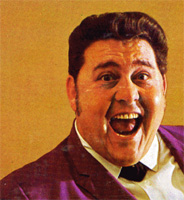
Of course, he was a singer on Hee Haw, most notably with their famed gospel quartet that featured Price, Grandpa Jones, Roy Clark and Buck Owens. He was also a fine solo recording artist for a number of years prior to that, with a rich traditional style full of personality and warmth. Before he did television exclusively, he already had around a dozen albums under his belt plus a few hits like "Walking on the New Grass," "Northeast Arkansas Mississippi County Bootlegger" and "The Sheriff of Boone County."
Price could flat-out deliver the goods, no matter what the tempo. In my estimation, he was at his best when doing bouncy, upbeat songs. The first recording I ever heard of his was "Let's Truck Together," a classic trucker anthem that I feel is his signature tune. But when tackling love songs or spirituals, he was still very much in his element. Price recorded for Boone Records (working with the very capable Ray Pennington), then later RCA where he was perfectly complimented by the legendary "Nashville Sound." (He again worked with Pennington, who always seemed to bring out his best, a few times during his RCA run.) His vocals were strong with plenty of character, and he did a lot of styles, which meant various production styles could be implemented.
Nicknamed "The Round Mound of Sound," the 300-pound Price parlayed his size into a few fun gimmick songs that were self-deprecating to a certain degree, but also filled with a sense of contentment that I have always found refreshing. One of the best is "The Heavyweight" (from the album of the same name) where he tells the ladies "... You won't get cold in the winter, and I'm shade in the summertime." Price, just like contemporary Cass Elliott, acknowledged his mass and refused to let it be a disadvantage, turning it into a strength and part of his identity. And, like Elliott, most of his material is cheerful and optimistic.
His music may be (sadly) long out-of-print, but it is still as effective as ever. If you get the hankering to listen to some really solid country, hunt down some of his LPs and get ready to smile. Kenny Price will not let you down.
Gilbert O’Sullivan has always produced strong, uncluttered tunes bursting with unusual musical and lyrical twists. Some of the songs happily stick in your head and carry you through the day; others can consume you with a genuine sense of sadness and melancholy. O’Sullivan paints with a palette very similar to that used by country legend Roger Miller, affording him tremendous creative leeway. He primarily deals with the sweet, obscure and absurd, while at the same time touching on issues that are universal and meaningful. He also focuses on moments and very particular imagery in a way that is very real and personal. Gilbert is very proud of his English and Irish isms, and those specific qualities pepper much of the material. As an American, I must admit I don’t know what he is talking about all the time, but that never detracts from the music.
He possesses a voice that is uniquely his own. When you hear Gilbert O’Sullivan, you know it. His sound is whimsical and easy-going, but the lightness does not disguise the underlying depth and sincerity. Time has not dulled his trademark impish buoyancy, either -- it has given it a few extra threads of complexity, and perhaps improved the whole package. For, while the core remains essentially the same, O’Sullivan is an artist in constant development, thus he remains fresh.
Gilbert has never had a “down period,” meaning his career has been solid throughout. His later albums are every bit as good as his earlier works. I will state that Singer Sowing Machine is the one I connect with the least, and I would count that as the one true misstep in his otherwise consistent career -- but there’s still good points about it, too, so it’s not a total wash. His catalogue, otherwise, has the same magic, charm and beauty that one expects out of Gilbert O’Sullivan. You can pick up any of his albums with confidence, knowing you’ll get an excellent product no matter when it was produced.
He may be 60 now, but I feel his career is far from over, and there are many avenues he will explore creatively before he steps away from the piano.
If you care about excellent pop music with roots in Tin Pan Alley that goes across many genres, I highly suggest you give this man another look. “Alone Again (Naturally)” is just a fraction of what this tremendous talent has to offer.
My top three albums...
|

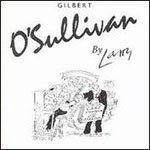 BY LARRY (1994)
This album features the unique concept of orchestra in the instrumental sections, and Gilbert’s joyful percussive piano only during the vocal sections – a highly complimentary presentation. Most importantly, some of the most memorable, organic, expressive songs he has ever produced are tied together with his ageless style and fabulous wit. It is a classic album on every front, without a shred of filler. This is the album that, to me, best expresses who Gilbert O’Sullivan is. Note: The Little Album is the same thing, minus two tracks. That’s how I was first exposed to this wonderful grouping of songs.
|
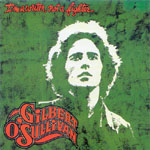 I'M A WRITER, NOT A FIGHTER (1973)
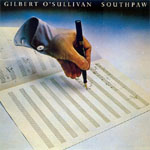 SOUTHPAW (1977)
|
For more information on Gilbert, visit his official web site: www.gilbertosullivan.com
His songs have a pure sweetness about it them that cannot be manufactured. When you hear them, you know it is coming right from his big heart. On the surface, it might be easy to disregard his sentiments as cornball. Really, it's just the fact we have become such a jaded society that it's difficult for us to accept such sincerity. Like it or not, people do genuinely feel this way and should never be embarrassed about it. Deardorff is who he is, regardless. It's yet another symbol of his tremendous courage.
I was first introduced to him through the album Ma La Lady by Danny & Joyce from 1975. (Several of these songs were used on Danny's best-known album, Deardorff & Joseph, a collaboration with Marcus Joseph.) I don't know who Joyce is -- she is not even listed on the album credits -- but it doesn't really matter. The music is a wonderful time capsule that takes you back to the mid-1970s, reminding you of a much simpler time. His songwriting style is very much rooted in his devotion to the Bahá'í faith -- this is lyrically and emotionally evident. "Earth," "The Little Kings of Earth" and the title track are personal favorites.
Deardorff has been recording without pause ever since. Living in the Pacific Northwest, he has done a great deal of work with Tickle Tune Typhoon, who perform children's shows in the name of love and world peace. Deardorff also operates the Mythsinger Foundation.
Now I won't claim to know and understand everything about him, but I sure do like what I have heard from him thus far, and I certainly hopes he continues making music and following his dreams until the end of his days.
|


|